
Declare 2.1 Guidance on RL-011 Lead in Alloys Exception
Last updated September 24, 2026
This guide explains how to disclose lead-containing metal alloys in Declare under the RL-011 Lead (added) exception. It provides guidance on the information to include in the alloy substance entry and examples of how to document lead-containing alloys in the Declare platform.
Before you start
Review the guidance on Reporting Metal Alloys in Declare.
Have the following information available before beginning your Declare submission:
- The alloy identification number or designation, such as a UNS, EN, or MPIF designation
- The chemical composition of the alloy
- The location or component where the alloy is used in the product
- The function of the alloy or component in the product
- Whether the alloy is enclosed, accessible to touch, subject to abrasion or wear, may generate particles or dust, or is in contact with water
- For plumbing products, applicable certification information and certification documentation
Does RL-011 apply to my product?
RL-011 applies when lead is intentionally present as part of a metal alloy used in a building product.
If your product contains lead that is not part of a metal alloy, check whether the lead ingredient is included on the Red List. You can enter the ingredient into Geofund or search the downloadable Red List to determine if it is listed. If lead is present as a non-alloy ingredient and is not eligible for another applicable exception, it will likely flag as Red List and the label will receive a "Declared" status.
When reviewing the requirements for RL-011 Lead (added), first determine whether the product is a plumbing product. If your product is a plumbing product, follow the Plumbing Products requirements below. For all other product types, follow the requirements for non-plumbing products.
What information is required?
For non-plumbing products, lead-containing alloys must include the following information in the alloy substance entry to achieve a Red List Approved Declare status:
- Lead content: The percentage by weight of lead (Pb) present in the alloy.
- Function: What the lead-bearing alloy does in the product.
- Exposure characteristics: How the alloy is incorporated into the product and the characteristics that may affect how people could come into contact with it during installation, use, or maintenance.
1. Disclose the lead content of the alloy
When an alloy is disclosed in Declare, identify the alloy using its applicable alloy designation and disclose the CASRNs and percentages by weight of the elements comprising the alloy. Review the Reporting Metal Alloys in Declare guidance for more details.
The Living Future reviewer will reference the chemical composition associated with the identified alloy and report the percentage by weight of lead present in the alloy.
Important: The percentage of lead in the alloy is different from the percentage of the alloy present in the finished product.
Example:
A brass alloy contains 2.5% lead by weight. The alloy may make up 10% of the finished product by weight. For RL-011, the relevant lead concentration is 2.5% of the alloy (not 10%, and not 0.25%).
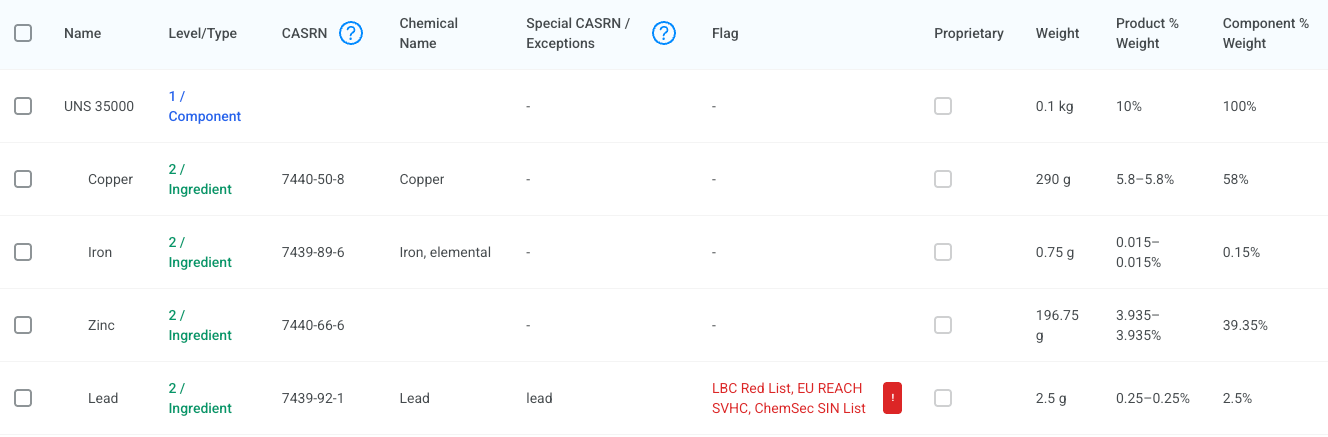
Figure 1. A brass alloy entry identified by its UNS 35000 designation at Level 1/Component in Geofund makes up 10% of the finished product weight as described above. Note that the lead is 2.5% of the brass alloy component weight, but 0.25% of the total product weight.
2. Describe the function of the alloy
In the substance description, briefly describe the function of the lead-bearing alloy in the product.
Describe what the alloy or component does in the product. A toxicological assessment or determination of health risk is not required.
Examples include:
- Provides machinability for a precision-machined component
- Provides a structural connection
- Provides electrical conductivity
- Provides corrosion resistance
- Functions as a bearing surface
- Provides a threaded connection
Example:
Lead-bearing brass alloy used for a machined valve body to improve machinability.
3. Describe the exposure characteristics
In the substance description, list all characteristics that apply to the alloy during installation, use, and maintenance.
Select or describe all that apply:
- Fully enclosed/inaccessible during normal use
- Accessible to touch
- Subject to abrasion or wear
- May be cut, drilled, ground, machined, or otherwise generate particles or dust during installation or maintenance
- In contact with potable water
- In contact with non-potable water
This information is intended to describe how the alloy is incorporated into and used in the product. You do not need to determine whether the alloy presents a health risk.
How to think about exposure characteristics:
Consider the physical conditions of the alloy during the product's installation, use, and maintenance.
For example:
Fully enclosed/inaccessible during normal use: The alloy is enclosed within another material or component and cannot normally be accessed during use.
Accessible to touch: The alloy is exposed or otherwise accessible to a person during normal use or maintenance.
Subject to abrasion or wear: The alloy is exposed to friction, rubbing, repeated contact, or other conditions that could cause the material to wear over time.
May generate particles or dust: The alloy may be cut, drilled, ground, machined, or otherwise disturbed during installation or maintenance in a way that could generate particles or dust.
In contact with potable water: The alloy is in direct contact with water intended for drinking.
In contact with non-potable water: The alloy is in direct contact with water that is not intended for drinking.
Example: Lead-containing brass component
Product scenario:
A manufacturer uses a brass alloy containing 2.5% lead by weight for a precision-machined valve component. The component is enclosed within the product during normal use but may be accessed during maintenance and may be machined during manufacturing or maintenance.
Information to disclose
Alloy: UNS [example alloy designation]
Lead content: 2.5% Pb by weight of the alloy
Function: Provides machinability for the precision-machined valve component.
Exposure characteristics:
- Fully enclosed/inaccessible during normal use
- May be cut, drilled, ground, machined, or otherwise generate particles or dust during installation or maintenance
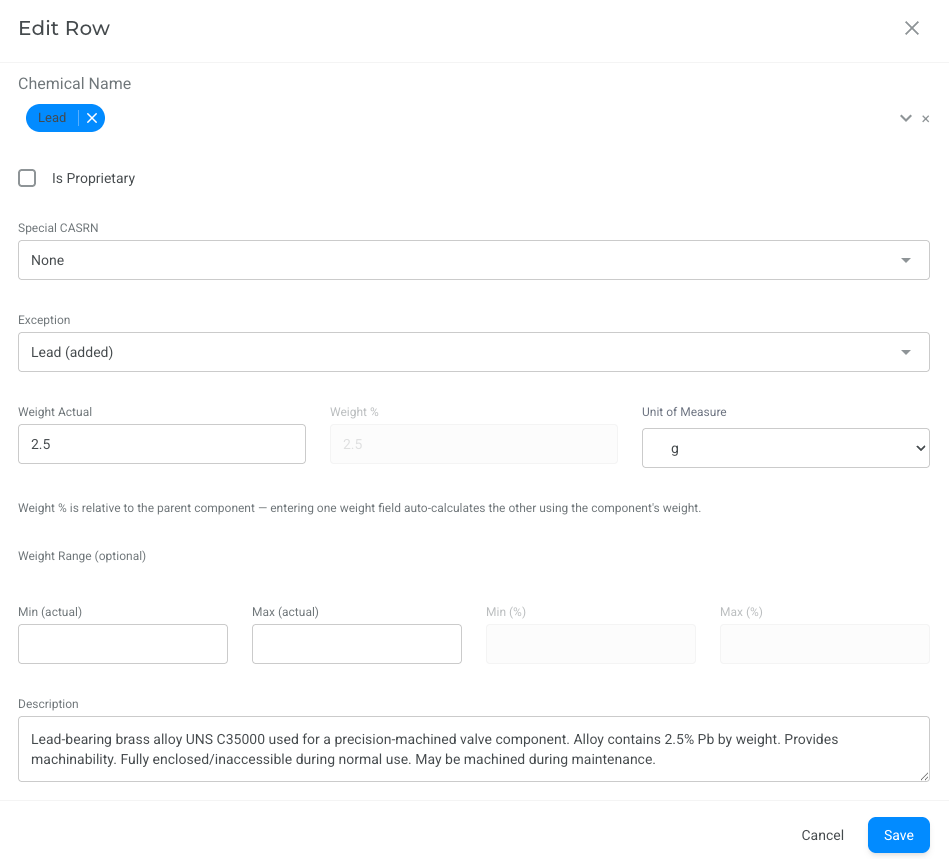
Figure 2. In Geofund, the lead entry description includes the alloy name, weight % lead, function of the alloy, and exposure characteristics of the part.
Example substance description
Lead-bearing brass alloy used for a precision-machined valve component. Alloy contains 2.5% Pb by weight. Provides machinability. Fully enclosed/inaccessible during normal use. May be machined during maintenance.
This example demonstrates the level of information expected. The substance description does not need to provide a toxicological assessment or calculate a separate exposure risk.
Example: Lead-containing alloy that is accessible to touch
Product scenario
A lead-containing alloy is used in an exposed component that can be touched during normal use.
Information to disclose
Function: Provides a durable, machinable connection.
Exposure characteristics:
- Accessible to touch
- Subject to abrasion or wear
Example substance description
Lead-bearing alloy used for a durable, machinable connection. Accessible to touch during normal use and subject to abrasion or wear.
Example: Lead-containing alloy that may generate particles or dust
Product scenario
A lead-containing alloy is used in a component that may be drilled or machined during installation or maintenance.
Example substance description
Lead-bearing alloy used for a machined mounting component. Provides machinability. May be drilled or machined during installation and maintenance.
Plumbing products
Plumbing products follow a separate pathway under RL-011.
Added lead is allowed in plumbing applications where products demonstrate compliance with the U.S. federal definition of “lead-free” as defined in the Reduction of Lead in Drinking Water Act, effective January 4, 2014.
Solder and flux may not contain more than 0.2% lead. Wetted surfaces of pipes, pipe fittings, plumbing fittings, and fixtures may not contain more than a weighted average of 0.25% lead.
Certification to NSF/ANSI/CAN 61, NSF/ANSI/CAN 372, or NSF/ANSI/CAN 61 & 372 fulfills this requirement.
How to document plumbing products in Declare
- Enter the applicable certification information in the alloy substance description.
- Upload certification documentation in the Files tab of the submission.


Figure 3. Brass plumbing component entry using the Special CASRN Reporting - Metal Alloys method.

Figure 4. Brass plumbing component entry with Description field detailing the chemical alloy makeup and the lead-free certification type.
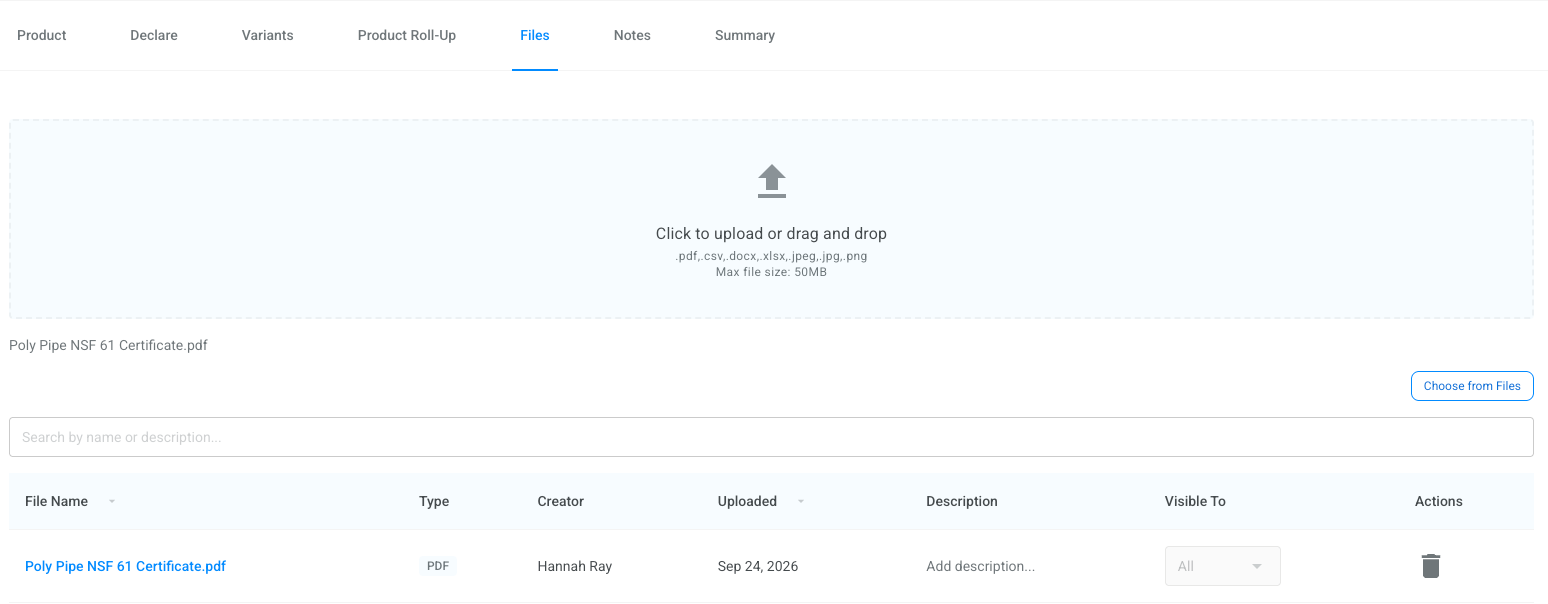
Figure 5. Files tab in Geofund with the NSF 61 certificate uploaded
What does a sufficient disclosure look like?
The goal is to provide enough information for the Living Future reviewer to understand what the lead-containing alloy is, what it does, and how it is incorporated into the product.
Sufficient
"Lead-bearing brass alloy used for a machined valve body to improve machinability. Alloy contains 2.5% Pb by weight. Fully enclosed/inaccessible during normal use. Accessible during maintenance and may be machined during maintenance."
Incomplete
"Lead-containing brass component."
This second example does not provide the information required to evaluate the alloy under RL-011. It must include the lead content, function, and applicable exposure characteristics.
What happens during review?
When an alloy is identified using an established alloy designation, the Living Future reviewer will reference the chemical composition associated with that alloy and report the percentage by weight of lead present in the alloy.
The manufacturer or preparer is responsible for providing the required information about the alloy and its use in the product. The Living Future reviewer uses this information as part of the review of the Declare submission.
Frequently asked questions
Do I need to calculate the amount of lead in the finished product?
The RL-011 requirement concerns the percentage of lead within the alloy composition. The Living Future reviewer will reference the identified alloy composition when reporting the percentage of lead present in the alloy.
Do I need to perform a toxicological or exposure assessment?
No. The required exposure information is descriptive. Identify the physical characteristics that apply to the alloy during installation, use, and maintenance.
What if the alloy is both enclosed and accessible to touch?
Describe the conditions that apply during the relevant phases of the product's life. For example, an alloy could be fully enclosed during normal use but accessible during maintenance.
What if more than one exposure characteristic applies?
List all applicable characteristics. For example, an alloy may be both accessible to touch and subject to abrasion or wear.
What if the alloy is used in more than one location in the product?
Describe the relevant function and exposure characteristics for the alloy as used in the product. If different uses have materially different exposure characteristics, describe each as appropriate.
What if I don't know the alloy designation?
Contact the material or component supplier to obtain the alloy identification and composition information needed for the Declare submission.
Does RL-011 apply to solder?
Follow the applicable requirements of RL-011 for the specific use of lead. Plumbing products have additional requirements for solder and flux; see the Plumbing Products section above.
Quick checklist
Before submitting a product containing a lead-bearing alloy, confirm that the alloy substance entry includes:
☐ Alloy identification/designation
☐ CASRNs and percentages by weight of the elements comprising the alloy
☐ Percentage by weight of lead (Pb) in the alloy
☐ Function of the lead-bearing alloy in the product
☐ All applicable exposure characteristics
☐ For plumbing products: applicable certification information
☐ For plumbing products: certification documentation uploaded to the Files tab
Getting Help
If you have any questions or require additional support please contact declare.support@living-future.org. Declare also hosts regular office hours; sign up here.